A €10 contribution allows us to deliver 2 hours of school orientation workshops for teachers. A €20 contribution allows us to deliver 4 hours of awareness workshops for families. A €50 contribution allows us to deliver 3 hours of mental health workshops with teenagers.
Mindcare Crisis Pack: YumaKids’ Response to the Earthquake Emergency
This is some text inside of a div block.
When an emergency disrupts more than the physical environment
On 10 August 2026, Colombia experienced a magnitude 7.4 earthquake with its epicentre in San José del Palmar, Chocó. According to the Colombian Geological Service, it was the third-largest earthquake recorded in Colombia’s history. The earthquake was felt across a wide area of the country and was followed by a sequence of aftershocks and continued seismic activity in the region.
An emergency of this magnitude affects more than infrastructure and physical safety. It can abruptly disrupt everyday life, interrupt established routines, generate uncertainty and increase fear, confusion and tensions within communities.
For children and adolescents, these disruptions can be particularly significant. Restoring a sense of safety and gradually re-establishing familiar routines are important components of recovery. Alongside the physical and material response to an emergency, communities therefore need resources that can address its emotional and psychosocial consequences.
YumaKids’ response: the Mindcare Crisis Pack
In response to this situation, Fundación YumaKids launched the Mindcare Crisis Pack, a programme designed to provide psychological first aid tools and psychoeducational resources in emergency and crisis settings.
The programme is based on a key principle: during a crisis, support cannot rely exclusively on individual professional care. Schools, teachers, families and community networks all play an important role in identifying needs, providing emotional support and helping children and adolescents gradually regain a sense of stability.
The Mindcare Crisis Pack, designed by mental health professionals, provides psychological first aid tools and psychoeducational resources that can be used by the adults and community members who regularly support children and adolescents.
It is not intended to replace specialised professional care when this is required. Rather, it aims to strengthen the capacity of educational communities to respond to the psychosocial needs that can emerge during and after an emergency.
Bringing the response into schools
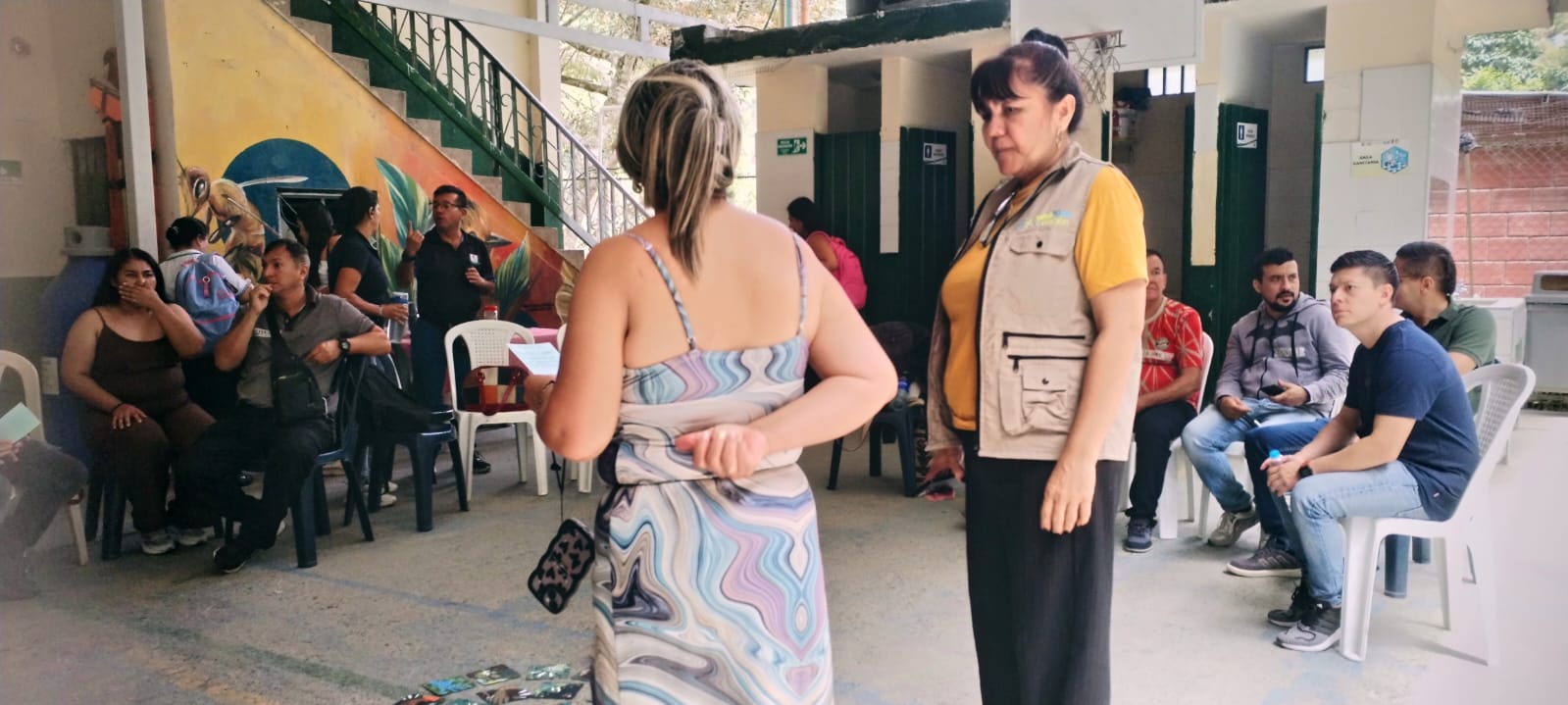
Implementation of the programme began in the rural area of Ibagué, at Institución Educativa San Francisco, with an initial workshop for teachers.
Teachers occupy a strategic position in emergency contexts. They maintain regular contact with children and adolescents, understand the local context and can play an important role in identifying changes in behaviour and emotional wellbeing, providing support and helping to restore routines and social connections.
The training provides teachers with practical resources to support children and adolescents experiencing fear, uncertainty or emotional distress, while also strengthening the support networks already present within the community.
A multiplier effect
One of the programme’s central features is its potential to extend the reach of psychosocial support through the educational community.
The programme is designed to reach 1,500 children and adolescents through the training of 50 teachers, thereby increasing the capacity of educational communities to provide support in response to a crisis such as the one experienced and contributing to strengthening resilience across the local area.
By training teachers and other community-based support figures, the programme also helps ensure that these tools remain available within the community and can be used in future situations requiring psychosocial support.
What is the Mindcare Crisis Pack?
The Mindcare Crisis Pack is a psychoeducational intervention programme that provides psychological first aid tools for children and adolescents through the adults and community members who support them, including teachers and educators.
Its approach combines educational, play-based and participatory activities with psychoeducational materials, sensory tools and training for families and caregivers.
Resources include materials that facilitate emotional expression, grounding techniques, care and self-care practices, and guidance on activating and strengthening support networks.
The programme is designed to provide a structured response in the aftermath of an emergency, when restoring a sense of safety, re-establishing routines and strengthening social connections can become important elements of the recovery process.
A response that continues
YumaKids’ response is not limited to the first educational institution where the programme was implemented.
The Mindcare Crisis Pack continues to be delivered in other educational institutions, progressively expanding access to psychosocial support tools and strengthening the capacity of educational communities to respond to emergency situations.
In communities affected by an emergency, recovery requires time, coordination and sustained support. Protecting children and adolescents means addressing their physical needs while also providing safe environments, support networks and practical resources to help them cope with the emotional and social consequences of a crisis.
The Mindcare Crisis Pack was developed as a response to emergency situations, while also building a lasting capacity within communities: to equip, support and strengthen the networks that help protect children and adolescents when they need it most.
Help us reach more children
The continuation and expansion of these programmes also depends on the support of people and organisations committed to protecting the mental health of children and adolescents in contexts of vulnerability and emergency.
You can help us reach more children by making a donation through this website.
.jpeg)
.jpeg)

.jpg)
.jpg)