A €10 contribution allows us to deliver 2 hours of school orientation workshops for teachers. A €20 contribution allows us to deliver 4 hours of awareness workshops for families. A €50 contribution allows us to deliver 3 hours of mental health workshops with teenagers.
Movement workshop: strengthening trust and resilience through body-based work
This is some text inside of a div block.
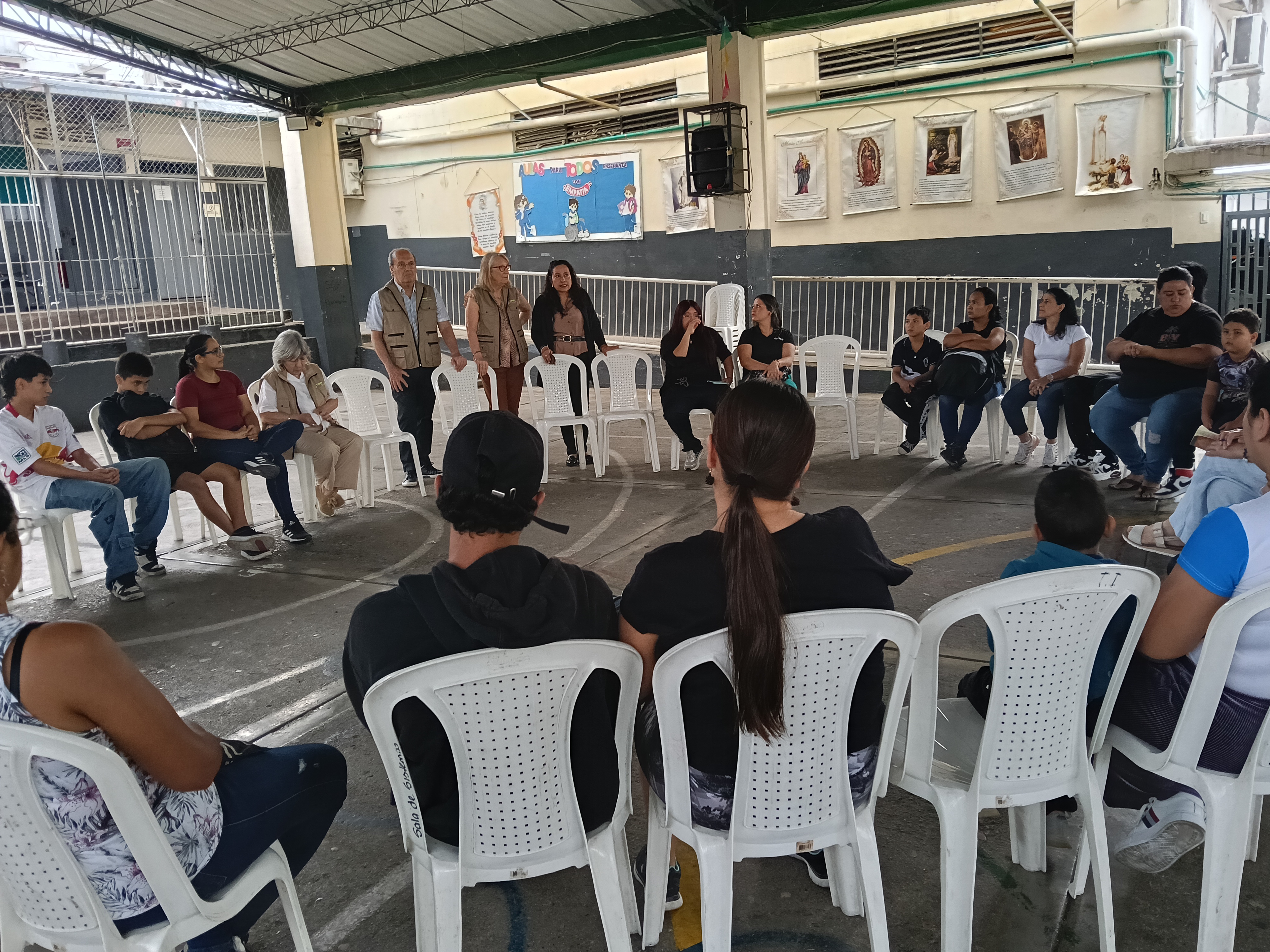
Between February 2 and 13, the Fundación Yumakids organized the workshop “El color en movimiento”, held in several public institutions in the city of Ibagué (Colombia). The activity was led by performing artist Nicolás Flórez, under the direction of the Foundation’s professionals.
The workshop was carried out with groups of pre-adolescent and adolescent minors, both boys and girls, creating spaces adapted to their different stages of development.
In Colombia, a significant proportion of children grow up in contexts marked by social inequality and exposure to different forms of violence, which can impact their emotional and relational development. In cities such as Ibagué, these realities are often combined with limited access to psychosocial resources and safe spaces for development. This context highlights the importance of community-based interventions focused on children’s emotional well-being.
This workshop is part of field-based interventions aimed at supporting the emotional well-being of children and adolescents, using movement and body expression as core working tools.
In contexts affected by inequality and exposure to violence, research has highlighted the impact these experiences can have on the development of trust. Organizations such as UNICEF note that children growing up in adverse environments may face greater difficulties in building interpersonal trust, regulating emotions, and feeling safe in relation to others.
Within this framework, the workshop introduced group dynamics based on movement and interaction, designed to create safe spaces for connection. Through body-based exercises, participants were able to explore trust in themselves and in others, develop non-verbal communication skills, and strengthen peer relationships.
In addition, activities focused on responsible leadership were implemented, promoting listening, respect, and shared decision-making. These practices enabled participants to take on active roles within the group, fostering autonomy and relational skills.
The workshop prioritized the creation of collective experiences that help reinforce resilience, understood as the ability to adapt and recover from adverse situations. In this sense, body-based work emerges as a valuable tool for supporting emotional processes in community settings.
This type of initiative highlights the importance of integrating expressive and participatory methodologies into social intervention programs, particularly in contexts where children have been exposed to situations of vulnerability.

.jpg)